Murder Mystery Case Files for Game Night – Setup, Rules, and Tips
I don’t just enjoy making these case file, I also love playing them myself. I’ve played them alone and in small groups. I know exactly what people do wrong, because I’ve made every type of mistake possible. These aren’t murder mystery dinner games where you need to plan a bunch of stuff advance, so there’s only a few things you’ll need to remember. I’ll just break down these simple things quickly in order to make your night go as smoothly as possible.
How a Case File Game Night Differs from Other Game Nights
Most game nights have a clear structure: someone knows the rules, explains them, and the game begins. Everyone is playing at the same time, there’s a scorekeeper, and the end is obvious when it arrives.
A case file is different from regular game nights as there are no turns. Everyone is working on the same objective together. You’re not keeping score or trying to beat other players, but rather trying to solve an objective together and move onto the next one. Everyone reads at a different pace and thinks about solutions differently, so a lot more discussion is necessary.
Think of it more as a group of friends meeting to try and solve a puzzle together. Case files often contain puzzles, secrets codes and lots of evidence that needs inspection.
Before the Night: Setup Checklist
Do all of this before your friends arrive. These are based on the mistakes I’ve made in the past. If you follow everything on this checklist, your night will go perfectly.
Choosing the Right Case for Your Group
Our top picks for game night are in this roundup of the best case files to solve at home, with difficulty ratings and info about every case. For game night specifically, here’s a quick guide based on group type.
| Group Type | Recommended Case | Why It Works |
|---|---|---|
| First-timers (any group size) | A Fatal Ruse | Medium difficulty, 4 objectives, lots of optional clues. Finishes in 2-3 hours. |
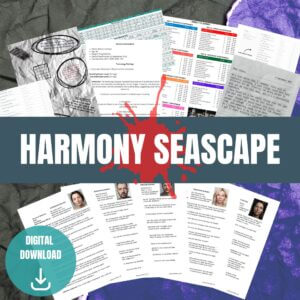
| 2-player date night | Harmony Seascape | Interesting nautical setting, 3 objectives, fast-paced. Finishes in 2-3 hours. |
| Group of 3-4, mixed experience | Hell at the Restaurant | Lots of evidence to work through. Medium-hard difficulty keeps it interesting throughout. Finishes in 2-4 hours |
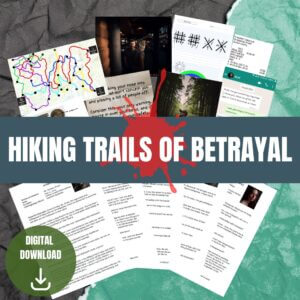
| Experienced group who wants a challenge | Hiking Trails of Betrayal | Hard, 6 objectives, 40 pages. Lots of codes and puzzles, will give anyone a challenge. Finishes in 2-4 hours. |
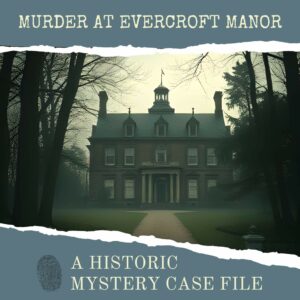
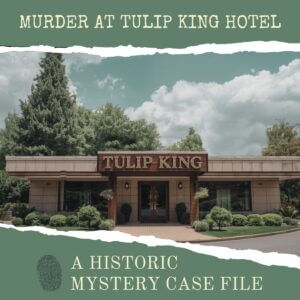
| Groups who love history | Murder at Evercroft Manor or Murder at Tulip King Hotel | Victorian or 1930s noir settings with realistic evidence that matches the period. Richer storytelling, longer play time, funny at time – plan the whole evening around one of these. |
The Rules of Playing Together
There really are no rules for play in case files, it’s all about having a good time. But I’ll add in some pointers that I’ve learned from many, many group night plays:
Most of the evidence and puzzles will need to be handed around to everyone because their impossible to solve by ear, but witness statements/interrogations, letters and newspaper have A LOT of words in them and it’ll take forever for each person in the group to read them individually. Take turns to read out longer documents to the group. You’ll still need to hand them around the double-check facts, but the initial read through is sometimes enough for players to jot down clues they notice.
You should complete objectives by consensus – meaning everyone should have a chance to think of an answer and explain why they think they are correct. Don’t rush through it. You might find the first objective ridiculously simple and wonder why your friends are taking so long, but everyone approaches problems from different angles. By objective 4, you might be completely confused while everyone else figures it out immediately. Give everyone the chance to enjoy the game fully, and they might ever discover some secret Easter eggs in the game that you completely missed.
Games can 2-4+ hours to play. Always have something to nibble on. Throw together some quick sandwiches and some juice, and have it ready to go. When frustration kicks in, it’ll help a lot with your hangry friends.
Take your time to throw out ideas and try to solve every clue and puzzle, but if your group simply isn’t getting anywhere – check out one of the hints. The first few hints are very general and won’t ruin the puzzle for you, but they might give you a good starting point or at least let you know if you’re going in the right direction.
Handling Different Skill Levels in the Group
If you’ve solved many cases before and your friends haven’t, there can be some pacing issues. More experienced players know how game designers think and where they might hide clues, so answers seem way more obvious than for new-comers. You don’t want your friends to feel like spectators while you bulldoze through the case
Here’s something that will help. If you’re the most experienced person, make sure that the evidence is passed around to everyone else before you see it. You’ll need much less time to spot patterns and track down clues than anyone else. I tend to focus on making sure that everyone has a refilled drink and having a good time. By the time the evidence gets to me, everyone has had a chance to think through some ideas and are ready to throw out suggestions.
Group Size: What Changes
What to Do After You Finish
Cases tend to take 2-4 hours, but can go longer or shorter. If your friends are still up for more games, you can pull out the free Deceptive Demise mini-case that’s short enough to finish in under 30 minutes. Alternatively, if you’re not ready to end the night, I like to put on a good murder mystery movie. or TV show. It’s keeps the same mood of investigation and discovery.
Frequently Asked Questions
How many players is best for a murder mystery case file game night?
There’s no exact size. I prefer to play alone, but if I’m having people over, 2, 3 or 4 all work great.
Do you need to print multiple copies for a group?
Only if you have more than 4 people. Four is the breaking point when it comes to sharing evidence. If you have a larger group, split them into small groups of 4 people or less and give each group their own set of evidence. Since the PDF is a digital purchase, you can print as many copies as you need at no extra cost.
When should a group use the optional hint system?
It’s best to do this by concensus. Give everyone plenty of time to throw out ideas and possible solutions. When everyone agrees that they’re out of ideas, you can use your first hint. The first hint is always pretty vague, so you’ll still have plenty opportunities to figure it out yourselves.