
The format of murder mystery case files has changed drastically – from dumping every clue on your lap immediately, to a more layered progression with hour-spanning investigations and multiple objectives to complete. This guide breaks down the new, modern mechanics, what has changed and what it means for a modern audience.
How Classic Games Handled Evidence

In classic murder mystery case files, the design of games was more open – everything was laid out on the table from the onset of the game. Players had access to all the evidence immediately and could start at any part of the case. There was only one objective – find the killer.
The “open dump” evidence model
This approach gave players the freedom to start their investigation wherever they wanted, and could pull on any thread that interested them. They could focus immediately on witness statements or spend their time focusing on interesting photographs.
However, this created a large structural problem. Evidence in these types of games is hidden in text and photos over multiple pages. Some pages have multiple clues, while others have none at all. With an open-dump model, some players are likely to grab the exact pages that contain all the clues needed to solve a case immediately. In a game that’s meant to last 1.5 to 2 hours, some keen-eyed players are able to solve it in 15 minutes. Another group of players could focus on a red herring or a plot hole that leads them down a completely unrelated investigation that leads nowhere.
The red herring problem
Classic case files relied heavily on red herrings to extend the playtime of games. If you followed the route the game creator had in mind, then you’d likely have an enjoyable experience. However, many players found themselves spending a significant amount of time following a false path throughout the story. And when the killer is revealed, it feels more like wasted time than an actual investigation. There were no guardrails to keep the story moving forward and ensure a good user experience.
If you followed the “correct” route, you could spend multiple hours enjoying the story, but if you wandered off the path (without knowing), your playtime would be cut short when you checked the answer and found out that you were incorrect.
The Objective-Based Format
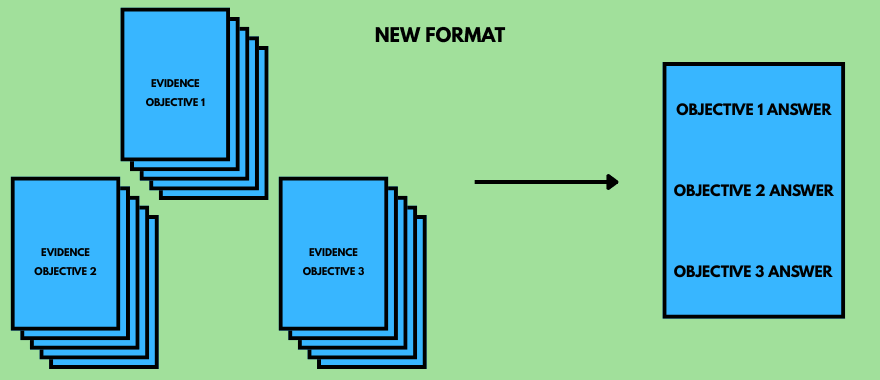
Modern case file games took a different approach to designing games. Instead of providing all the evidence at once, the investigation is split into objectives. Players are not given all the evidence at the start. They unlock it after completing different sections of the case.
How progressive objectives work
Splitting a case into objectives gives players set goals that they need to achieve in each section. These could be things like identifying the time of death, establishing where each suspect was that evening, or naming a new suspect from the evidence. When an objective is completed, players will unlock additional evidence to help them with the next section of the case. When players confirm that they’ve solved an objective correctly, it confirms that they are on the correct path – avoiding unnecessary meandering.
This objective-based approach also prevents players from accidentally completing a game in 15 minutes. None of the evidence you have in the first few objectives will be sufficient to solve the overall case, but it will be enough to complete the current objective. This allows the designer of the game to slowly escalate the mystery and tell the narrative that they want to.
Multi-hour engagement by design
Because modern games have more control over when new information is added, designers can better engineer games to run for longer sessions without artificial padding. The story can make head in one direction during the first objective, and switch to another route for later objectives. This means that cases can have branching paths and multiple red herrings, as every clue does not need to point to the same conclusion.
Evidence Systems Compared
The following infographic maps the key differences between old and new murder mystery case files:
All at once
Every clue, document, and witness statement is provided at the start.
Unpredictable
Could end in 20 minutes or drag beyond 3 hours. Pacing relies entirely on player behavior.
Unguided dead ends
False leads are present but players have no signal for how much weight to give them.
Fragmented
Players frequently take incorrect routes.
Flat disclosure
No story escalation. The ending rarely feels dramatic.
Gated by objectives
New evidence unlocks only when players complete an objective.
Engineered duration
Designers target 2–3 hour sessions by adding more objectives.
Structured misdirection
False paths have resolutions after each objective, so players feel the design is fair.
Synchronised
Objectives keep the whole group working on the same problem at the same time.
Designed escalation
Story builds and meanders during initial objectives, before directing toward the real killer for the final objective.
How the formats score across key player experience dimensions
Based on aggregated player feedback and design analysis across popular titles in both formats.
* Classic = open-dump evidence model. Modern = objective-gated evidence model. Scores indicative.
Difficulty, Pacing and Replay Value
One of the key problems with older murder mystery cases was that once you checked the answer sheet, the case was over. If you had guessed the incorrect suspect – there was no way to correct your mistake. An early clue could have led you down the wrong path without any opportunity to put you back on the right track. With modern games, each objective has an answer and additional information to make sure that this is never the case.
Difficulty tiers and hint systems
Difficulty settings are now easier to implement into case files now that there is a set path that players will follow. Objectives can include puzzles or cryptic notes, that need to be deciphered, in order to be completed. These puzzles can dramatically change the difficulty levels of games.
Hints are usually included in games. Instead of a handful of hints to direct you to the killer, objective-based cases can have a multitude of clues for a section of the game. This makes case files more accessible for a larger audience.

Sherwin has been designing and selling murder mystery cases from 2023. His murder mystery case files have received rave reviews and he has since expanded into murder mystery dinner party games as well. Prior to this, he spent 10 years creating high quality digital products for his customers.